Online Pet Vet Pharmacy: Best Deals Up to 40% Off + FREE Shipping on Orders €100+


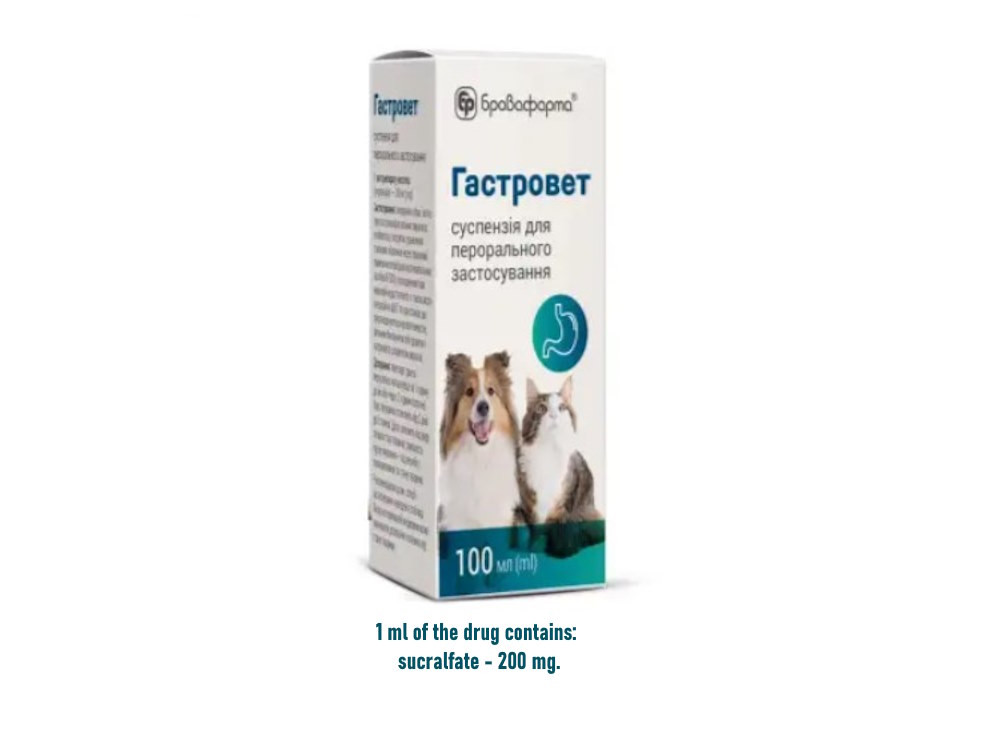




Gastrovet Suspension, 100 ml
Description
Suspension of light beige or beige color, homogeneous, with a characteristic smell of caramel.
Composition
1 ml of the drug contains:
sucralfate – 200 mg.
Pharmacological properties
Sucralfate is an anionic sulfated disaccharide consisting of sucrose sulfate and aluminum hydroxide. It accelerates the healing of ulcers, prevents their recurrence, and has virtually no systemic effect.
Binds to proteins of necrotic tissue in the ulcer area, forming a protective barrier that reduces the aggressive effect of pepsin, gastric juice and bile salts on damaged tissues. Reduces pepsin activity by approximately 30%.
Sucralfate accelerates the healing of duodenal and gastric ulcers, promotes the treatment of mild to moderate inflammation of the esophagus. Prevents recurrence of duodenal ulcers, the development of stress-induced ulcers, and also reduces the absorption of phosphates in the gastrointestinal tract.
Absorption of sucralfate is less than 5%, so the drug does not have a systemic effect. About 0.005% of the aluminum contained in it is also absorbed. The absorbed drug is excreted by the kidneys, while its main part is excreted unchanged in the feces.
Indication
Treatment of dogs and cats with gastroesophageal ulcers, esophagitis, gastritis, mucosal lesions due to long-term use of nonsteroidal anti-inflammatory drugs (NSAIDs), complications of renal failure, as well as after operations on the digestive tract and in conditions accompanied by bleeding, severe vomiting or diarrhea and threatening the development of ulcers.
Contraindication
Do not use in animals with hypersensitivity to the components of the drug and severe renal failure.
Method of administration and doses
The drug is administered orally on an empty stomach 1 hour before or 2 hours after a meal. The course of treatment is from 2 days to 6 weeks. The dose depends on the type and body weight of the animal, the duration of the course depends on the course of the disease and the condition of the animal.
The recommended doses and method of administration are given in the table. The veterinarian may change the dosage depending on the condition of the animal.
| Animal species | Body weight, kg | Drug dose, ml | Application |
| Cats | any | 1–2 | in 8–12 hours |
| Dogs | 10 | 1–2 | in 6–8 hours |
| 10–20 | 2–3 | ||
| 20 | 4–5 |
Reservation
Possible side effects from the gastrointestinal tract: caprostasis, diarrhea, nausea, vomiting, flatulence. Sometimes the drug can cause or worsen intestinal obstruction and intestinal obstruction.
A small amount of aluminum contained in sucralfate can be absorbed in the gastrointestinal tract. It is excreted without complications in normal renal function. In animals with severe renal impairment, aluminum accumulation in the body is possible, especially when other drugs containing aluminum are used simultaneously. Aluminum accumulation can cause toxic effects.
There is no data on the negative impact of sucralfate on fetal development. Due to the lack of clinical studies, the drug should be administered to pregnant or lactating animals only after a veterinarian has assessed the benefit-risk ratio for the animal’s health.
Sucralfate reduces the absorption of tetracycline, cimetidine, ranitidine, fluoroquinolones, digoxin, long-acting theophylline, warfarin, ketoconazole, L-thyroxine, quinidine, and phenytoin. These drugs should be administered at least 2 hours before sucralfate.
Usually, even large doses of sucralfate are of low toxicity, but if vomiting occurs, symptomatic therapy is recommended.
Storage conditions
In a dry, dark place at temperatures up to +25 °C.
After opening the bottle, use the drug within 28 days.
Do not freeze!
Expiration date
3 years.
GASTROVET FOR DOGS AND CATS: HOW TO PROTECT THE MUCOSA OF THE STOMACH AND ESVOX
Digestive problems in dogs and cats are one of the most common reasons for seeking veterinary care. Vomiting, nausea, refusal to eat, abdominal pain, diarrhea, black stools, or blood in vomit can indicate not only a common digestive disorder, but also serious diseases, including damage to the mucous membrane of the digestive canal.
The mucous membrane of the esophagus, stomach and intestines is in daily contact with food, digestive enzymes, bile salts, medicines and other factors that under certain conditions can cause irritation. In a healthy animal, natural protective mechanisms maintain the integrity of the mucous membrane. However, as a result of diseases, repeated vomiting, the use of certain medicines or after surgical interventions, this protection can be disrupted. As a result, inflammation, erosions and ulcers occur, which require timely diagnosis and treatment.
One of the products used to protect the mucous membrane of the stomach and esophagus is Gastrovet, produced by Brovapharma LLC.
What is Gastrovet and how does it work?
Gastrovet is a veterinary medicine for dogs and cats in the form of a suspension for oral administration. Its active ingredient is sucralfate.
Sucralfate belongs to the group of gastroprotective agents used for local protection of damaged mucous membranes of the digestive tract.
In the acidic environment of the stomach, sucralfate forms a gel-like mass that binds to damaged areas of the mucous membrane and forms a protective barrier.
This barrier helps:
- reduce contact of erosions and ulcers with hydrochloric acid;
- limit the irritating effects of pepsin and bile salts;
- protect damaged tissues from further exposure to an aggressive environment;
- create favorable conditions for the natural restoration of the mucous membrane.
An important feature of sucralfate is minimal systemic absorption and predominantly local action.
Please note: sucralfate does not suppress gastric acid secretion like proton pump inhibitors. Its main task is to protect the damaged mucosa.
When do dogs and cats need mucosal protection?
The need for gastroprotective therapy arises primarily in cases of established or suspected erosive-ulcerative lesions of the digestive tract.
A veterinarian may consider using Gastrovet for dogs and cats for the following conditions:
- esophagitis, in particular reflux esophagitis, accompanied by damage to the esophageal mucosa;
- erosions and ulcers of the stomach and duodenum;
- damage to the esophagus due to prolonged contact with irritants or retention of tableted medications;
- irritation and damage to the mucous membrane after repeated vomiting;
- mucosal lesions associated with the use of certain nonsteroidal anti-inflammatory drugs;
- conditions after removal of foreign bodies from the esophagus or upper digestive tract, when there is damage to the mucous membrane.
In case of gastritis, renal failure, or after operations on the digestive tract, the appropriateness of using sucralfate is determined individually, depending on the nature of the lesion.
It is important to understand that Gastrovet is not a universal remedy for vomiting, diarrhea or abdominal pain. These symptoms can indicate various diseases, so first of all, you need to establish the cause of their occurrence.
Why is Gastrovet convenient to use?
The drug Gastrovet in suspension form has several practical advantages.
First, the drug can be administered orally using a dispenser. This is especially convenient for cats, small dogs, and animals that have difficulty giving pills.
Secondly, the liquid form allows the drug to come into contact with the esophageal mucosa. This is important for esophagitis, reflux damage, and esophageal irritation after taking tablet medications.
Thirdly, the suspension allows you to measure the prescribed volume of the drug according to the treatment regimen.
In veterinary practice, liquid forms of sucralfate are preferable to tablets, especially when esophageal protection is required.
How is Gastrovet different from antiemetics?
Antiemetics affect the mechanisms that cause vomiting and help control this symptom.
Gastrovet has a different task: it forms a protective barrier on damaged areas of the mucous membrane.
Therefore, sucralfate for dogs and cats is not a substitute for antiemetics, acid suppressants, or treatment of the underlying disease.
For example, in case of severe gastritis, esophagitis, or ulcerative lesions, the doctor may prescribe complex therapy that includes vomiting control, acidity correction, appropriate nutrition, and, if necessary, infusion therapy.
The need for additional use of a gastroprotective agent is determined individually.
How is Gastrovet used?
Gastrovet is administered orally and is recommended to be taken on an empty stomach 1 hour before or 2 hours after feeding to ensure contact of the drug with the mucous membrane.
The scheme of application of Gastrovet is as follows:
Cats are given every 8–12 hours at a dose of 1–2 ml regardless of body weight.
Dogs are usually given the drug every 6–8 hours at a dose of:
- with a body weight of up to 10 kg – 1–2 ml;
- with a body weight of 10–20 kg — 2–3 ml;
- with a body weight of over 20 kg – 4–5 ml.
The course of treatment can vary from 2 days to 6 weeks. Its duration depends on the condition of the animal, the cause of the disease, the severity of the mucosal damage, and the recommendations of the veterinarian.
Why is it important to observe the intervals between medications?
Sucralfate may affect the absorption of some drugs in the digestive tract and reduce their bioavailability.
Particular attention should be paid to the simultaneous use of certain antibiotics, in particular fluoroquinolones and tetracyclines, as well as other oral drugs for which such interactions have been established.
It is usually recommended to separate their administration with sucralfate in time. Some drugs are administered at least 2 hours apart, but the specific regimen is determined by the veterinarian.
If your pet is receiving multiple medications, be sure to inform your veterinarian.
Practical advice for dog and cat owners
To ensure that the treatment is safe and effective, follow a few rules:
1. Do not use Gastrovet as a stand-alone remedy for any vomiting or diarrhea. First, you need to determine the cause of the symptoms.
2. Adhere to the prescribed dose, frequency of application and duration of the course.
3. Do not mix the drug with other medications without the advice of a veterinarian.
4. If the animal is receiving multiple oral medications, specify the necessary intervals between them.
5. Observe the animal’s appetite, behavior, vomiting, and bowel movements. This will help the doctor assess the course of the disease.
Especially important: black tarry stools, vomiting blood, severe weakness, or severe abdominal pain may indicate serious damage to the digestive tract, including bleeding. These symptoms require immediate veterinary attention.
Gastrovet: mucosal protection when needed
The main thing in diseases of the digestive tract is not to mask the symptoms, but to find out the cause of their occurrence. If the diagnosis confirms damage to the mucous membrane, the veterinarian determines whether additional local protection is needed and what role it will play in the treatment regimen.
Use Gastrovet according to the approved instructions and recommendations of your veterinarian.